Tasha Fairfield

Course location

Home university

London School of Economics

Course location

Home university

London School of Economics
Fairfield_head_quadratisch
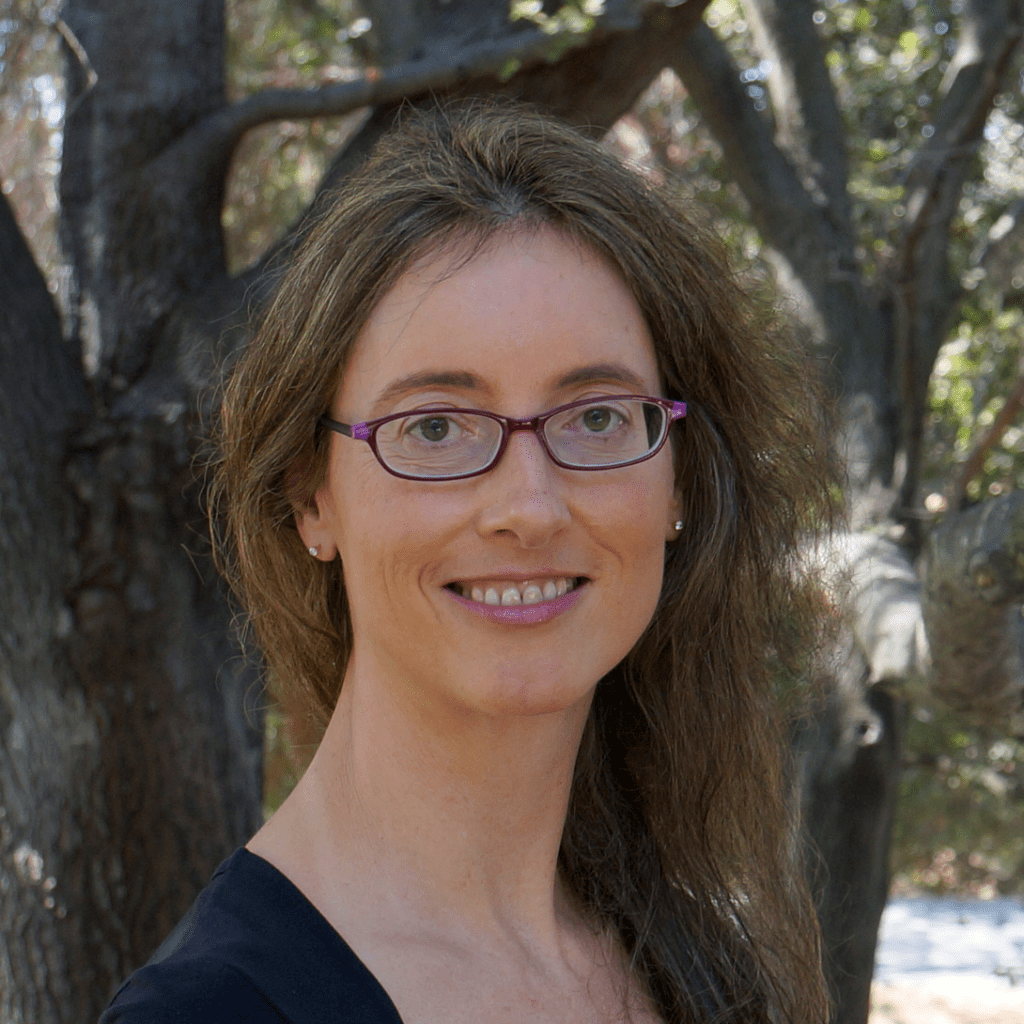
Tasha Fairfield joined the European University Institute as Chair in Political and Social Sciences in September 2025. She holds a Ph.D in political science from UC Berkeley and was previously an associate professor at the London School of Economics. Her comparative politics research has analyzed the political economy of inequality, the politics of policy formulation, and business-state relations in Latin America. Fairfield received the 2024 APSA-QMMR David Collier Mid-Career Achievement Award for her methodological work on Bayesian analysis for qualitative research, including Social Inquiry and Bayesian Inference (CUP 2022), which was initiated during a 2017–18 Mellon Foundation Fellowship at Stanford University’s Center for Advanced Study in the Behavioral Sciences. She convenes the Qualitative Bayesian Reasoning Network for scholars interested in employing the method. Fairfield’s research has appeared in journals including Political Analysis, Comparative Political Studies, and Perspectives on Politics. Her current research interests include the distributive politics of climate change.

Courses taught by this instructor

Course

Description

Instructor

Level

Next course

Location

Course

Description

Instructor

Level

Location

Next course

Qualitative Bayesian Reasoning for Case Studies

The way we intuitively approach qualitative case research is similar to how we read detective novels. We consider various different hypotheses to explain what occurred— whether a major tax reform in Chile, or the death of Samuel Ratchett on the Orient Express—drawing on the literature we have read (e.g. theories of policy change, or other Agatha Christie mysteries) and any salient previous experiences we have had. As we gather evidence and discover new clues, we continually update our beliefs about which hypothesis provides the best explanation—or we may introduce a new alternative that occurs to us along the way. Bayesianism provides a natural framework that is both logically rigorous and grounded in common sense, that governs how we should revise our degree of belief in the truth of a hypothesis—e.g., “the imperative of attracting globally-mobile capital motivated policymakers to reform the tax system,” or “a lone gangster sneaked onboard the train and killed Ratchett as revenge for being swindled”—given our relevant prior knowledge and new information that we obtain during our investigation. Bayesianism is enjoying a revival across many fields, and it offers a powerful tool for improving inference and analytic transparency in qualitative process-tracing research. This interactive course introduces the principles of Bayesian reasoning for process tracing and case study research with the goal of helping to leverage common-sense understandings of inference and hone intuition when conducting causal analysis with qualitative evidence. We will examine concrete applications to single case studies, comparative case studies, and multi-methods research. Participants will learn how to construct rival hypotheses, assess the inferential weight of qualitative evidence, and evaluate which hypothesis provides the best explanation through Bayesian updating. The short course will also overview key aspects of research design, including iteration between theory development and data analysis. Throughout, we will conduct a wide range of exercises and group work to give participants hands-on practice at applying Bayesian techniques. Upon completing the course, participants will be able to read qualitative case studies more critically and apply Bayesian principles to their own research.

...

...

M

2025

Qualitative Bayesian Reasoning for Case Studies

The way we intuitively approach qualitative case research is similar to how we read detective novels. We consider various different hypotheses to explain what occurred— whether a major tax reform in Chile, or the death of Samuel Ratchett on the Orient Express—drawing on the literature we have read (e.g. theories of policy change, or other Agatha Christie mysteries) and any salient previous experiences we have had. As we gather evidence and discover new clues, we continually update our beliefs about which hypothesis provides the best explanation—or we may introduce a new alternative that occurs to us along the way. Bayesianism provides a natural framework that is both logically rigorous and grounded in common sense, that governs how we should revise our degree of belief in the truth of a hypothesis—e.g., “the imperative of attracting globally-mobile capital motivated policymakers to reform the tax system,” or “a lone gangster sneaked onboard the train and killed Ratchett as revenge for being swindled”—given our relevant prior knowledge and new information that we obtain during our investigation. Bayesianism is enjoying a revival across many fields, and it offers a powerful tool for improving inference and analytic transparency in qualitative process-tracing research. This interactive course introduces the principles of Bayesian reasoning for process tracing and case study research with the goal of helping to leverage common-sense understandings of inference and hone intuition when conducting causal analysis with qualitative evidence. We will examine concrete applications to single case studies, comparative case studies, and multi-methods research. Participants will learn how to construct rival hypotheses, assess the inferential weight of qualitative evidence, and evaluate which hypothesis provides the best explanation through Bayesian updating. The short course will also overview key aspects of research design, including iteration between theory development and data analysis. Throughout, we will conduct a wide range of exercises and group work to give participants hands-on practice at applying Bayesian techniques. Upon completing the course, participants will be able to read qualitative case studies more critically and apply Bayesian principles to their own research.
...

...